


Period poverty affects 1 in 2 young women in France. In Marseille, several associations and a sewing workshop are joining forces to fight against this precariousness. Portrait of some of these initiatives that transform social emergency into concrete action.
13 Atypik, break the taboo
In the workshop, between tote bags and pencil cases made from old RTM (Marseille transport company) polo shirts, the loud noise of fifty sewing machines never stops. It has been even busier since 2024, when production of period pants began. But these are not just any sanitary products: they are the very first menstrual pants made in Marseille.
‘La Culotte du Sud’, recognizable thanks to its yellow sun, was created as part of the national law to fight against period poverty launched by the government in 2023. Attracted by the initiative, Sahouda Maallem, the workshop's creator, responded to the call for projects by proposing the creation of period pants. The seamstress knows exactly to whom she would distribute her creations: the most vulnerable, particularly students and homeless menstruating people. ‘If we still find it difficult to talk about our periods, I can't even imagine what it's like for women on the streets’, explains the panties designer.
This project is above all a personal story. When she was younger, the big-smiling Marseillaise suffered from this insecurity and the taboo about periods. Coming from a large family with seven sisters and three brothers, discussion was unthinkable: ‘We didn't talk about periods. I never had sanitary pads, so I put cotton and shorts underneath’ she says with tears in her eyes.
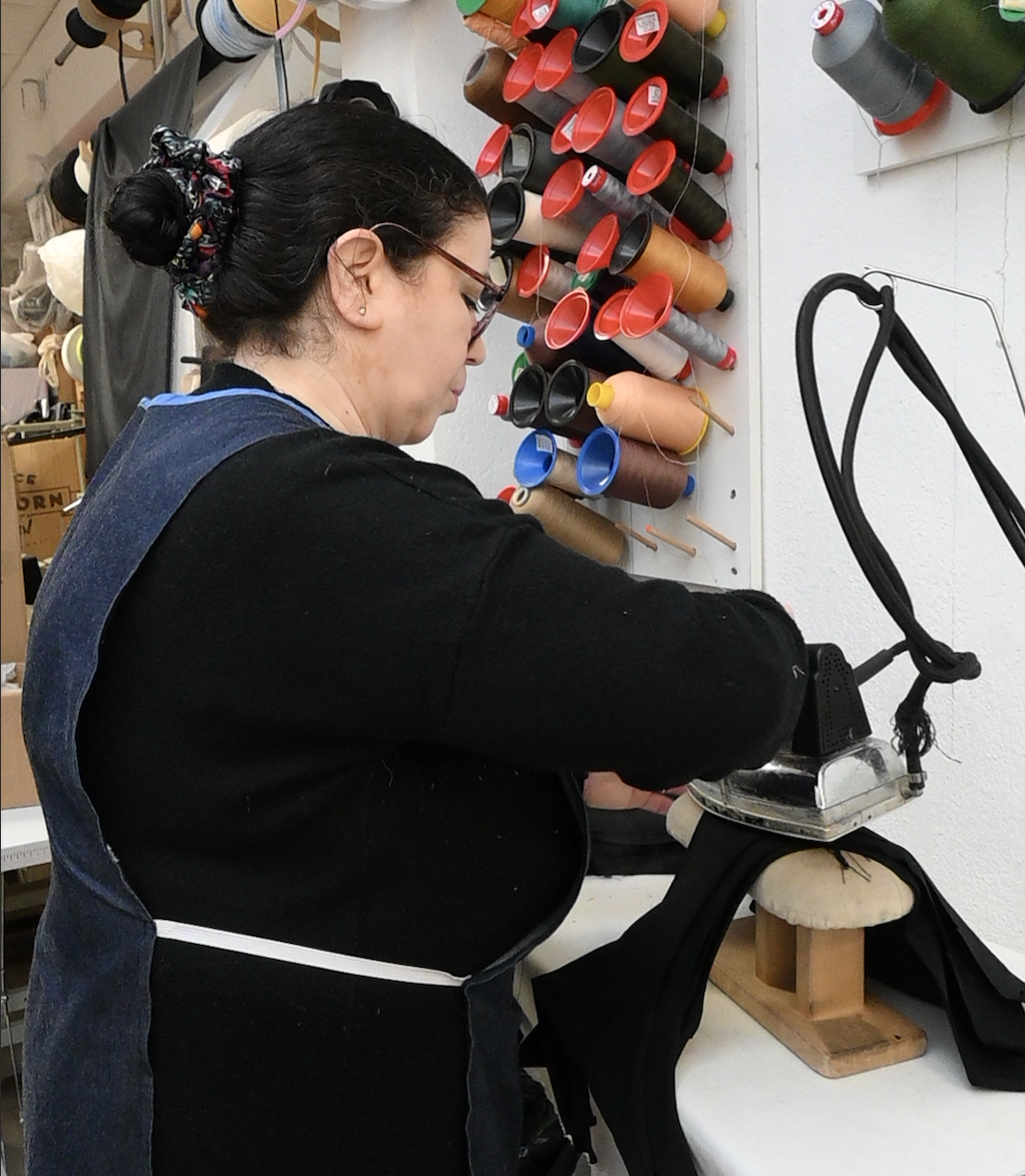
Assya, seamstress in charge of the team manufacturing the ‘Culotte du Sud’ at 13’Atypik. Photo: Clara Gazel
Sahouda Maallem wants to see this taboo disappear. Thus, she called on a design office, found funding, including from the DREETS (Regional Directorate for Economy, Employment, Labour and Solidarity), and trained ten of her employees. She taught them how to sew the panty liners together, thread the elastic bands, and did not hesitate to unpick their work if she was not satisfied with it. Because beyond comfort, the goal is also to make high-quality knickers: ‘We decided to make beautiful period pants, not ugly ones.’
Since 2025, 1.750 period pants have been created and distributed to six associations, including Amical du Nid, which helps people involved in prostitution.
An environmental project
The project took more than three years to come, mainly because of the desire to design environmental-friendly knickers. For the director of a sewing workshop specialising in upcycling, importing materials from abroad was unthinkable. From Gémenos near Marseille for the embroidery to Lyon for the elastic, and the Baumettes prison workshop for the sewing of the membrane, the knickers proudly proclaim their local roots. Only the bamboo used for the membrane comes from Europe, as it is not produced in France. Made from 100 % organic cotton, ‘La Culotte du Sud’ now has the Oeko-Tex label, a certification guaranteeing the absence of dangerous substances.
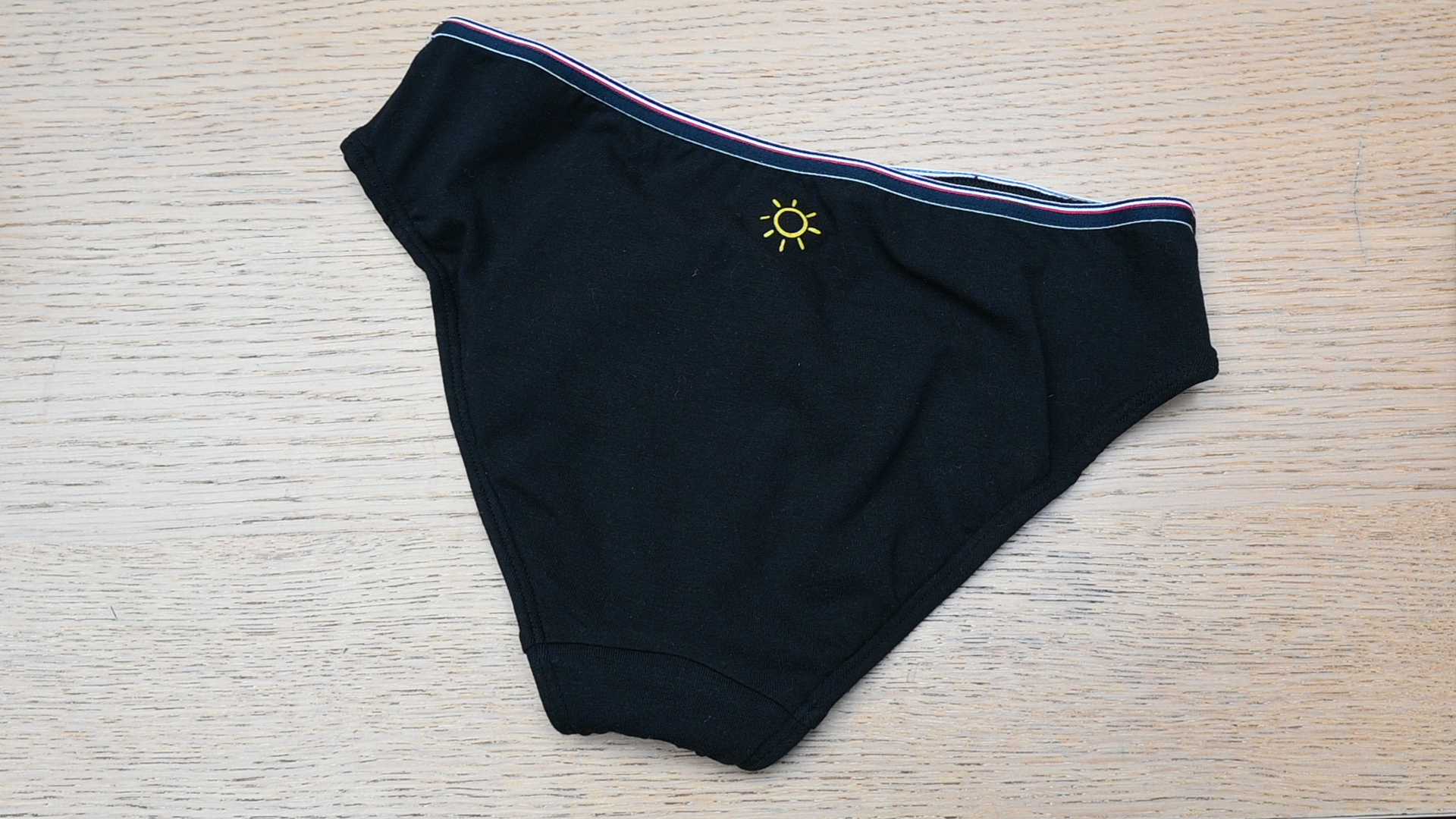
‘La Culotte du Sud’, the very first menstrual pants created in Marseille. Photo: Clara Gazel
14.000 people are identified by 13 Atypik as needing sanitary pads in Marseille. ‘But one period pants is not enough when you are on your period. You need at least two more,’ adds the designer. Therefore, the workshop must create around 30.000 menstrual pants. Sahouda Maallem wants to continue and develop this short supply chain, first at regional level, then nationally.
In Marseille, other associations are also working to fight against period poverty, in different ways.
Cœur de Cagoles, creating to reclaim your body
In the Chartreux neighbourhood (4th arrondissement), at the third place La Base, there is no large workshop. With Cœur de Cagoles, sewing takes place in a small, secluded room. Along the walls, fabric scraps of all kinds. Sanitary pads patterns are displayed on a large board. Diagrams explain each step: cutting, gathering, sewing, attaching a button or Velcro. The goal: to enable menstruating people to make their own reusable period pads.
‘Use creativity within the feminist struggle with an environmentalist approach’
‘We started from the simple observation that there is a huge amount of textile waste in Marseille,’ explains Annarita Gaudiomonte, co-founder of the collective created in 2019. ‘The idea is therefore to use creativity within the feminist struggle with an environmentalist approach.’ This initiative is based on rigorous groundwork. ‘We have identified zero-cost fabrics with good absorption and wash resistance properties.’ This research led to the development of unique patterns, instructions and a detailed tutorial, accessible to all. ‘The essential thing is that it can be distributed, shared, and above all, free,’ insists Annarita Gaudiomonte.
Much more than just a hobby, making these reusable period pads is a way of reclaiming one’s body. ‘Making your own reusable pads allows you to touch your blood, rather than just using it and throwing it away.’
This approach also helps to break down the deeply rooted taboos surrounding periods. ‘Blood is often seen as something dirty,’ says Annarita Gaudiomonte. ‘And many people tell us: “It's beautiful because I have a pretty fabric that I can bleed on.”’
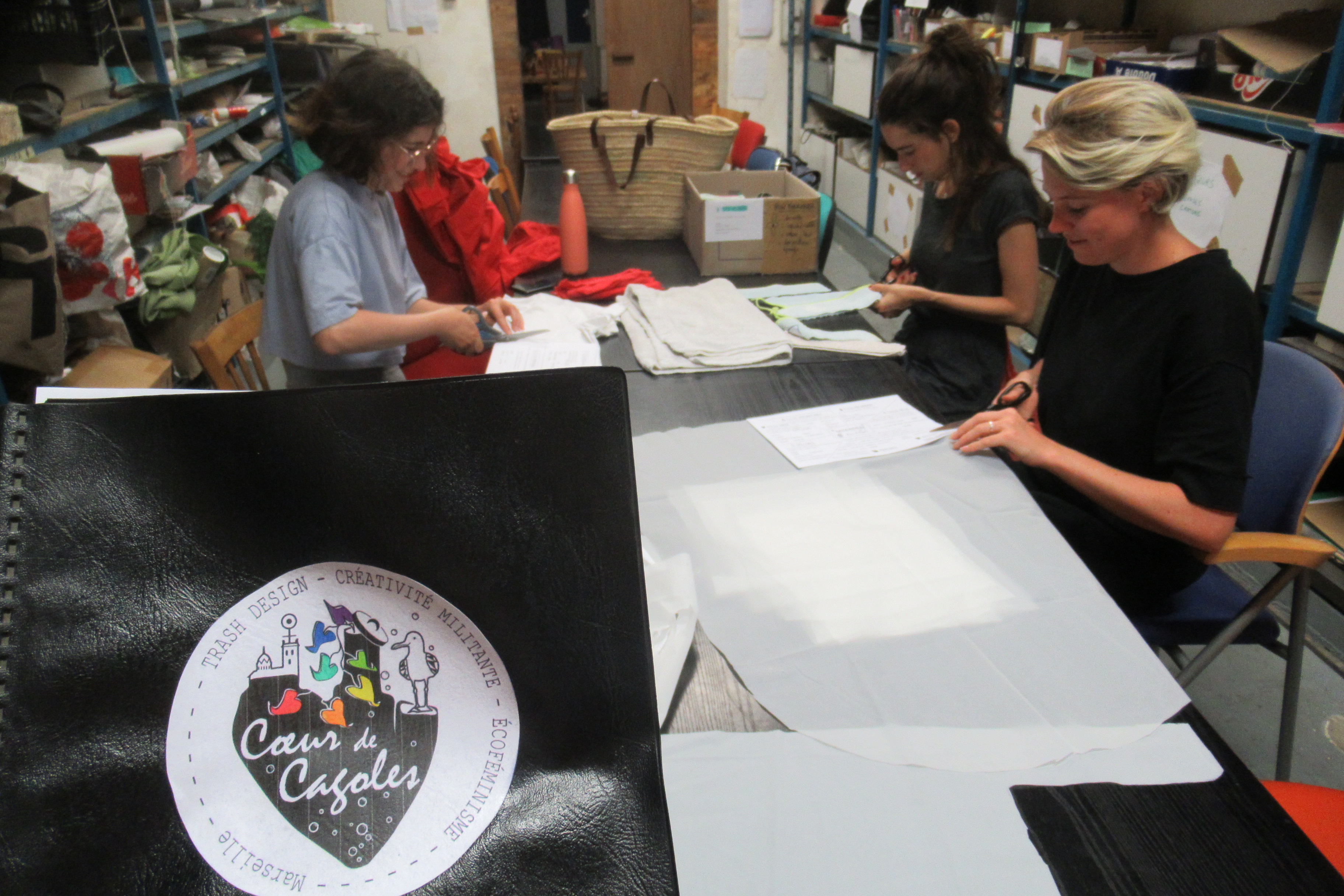
Coeur de Cagoles organises workshops to enable menstruating people to make their own reusable period pads. Photo: Coline Juttet
However, Cœur de Cagoles’ commitment doesn't stop there. In 2024, the association published an illustrated booklet on menstrual education for 14-20 year olds. ‘The idea was to take a creative approach to menstrual health,’ summarizes Annarita Gaudiomonte.
Complementarity between associations
The collective leads this fight against period poverty with other organisations. Since 2021, Coeur de Cagoles has been working with the Family planning. Together, they have designed a terminal installed in their Marseille premises, containing complete kits for making reusable period pads. Awareness workshops are also held with the association Règles Élémentaires. ‘It’s very complementary,’ notes Annarita Gaudiomonte. ‘We bring the more creative and practical side, and they provide the more theoretical aspect.’
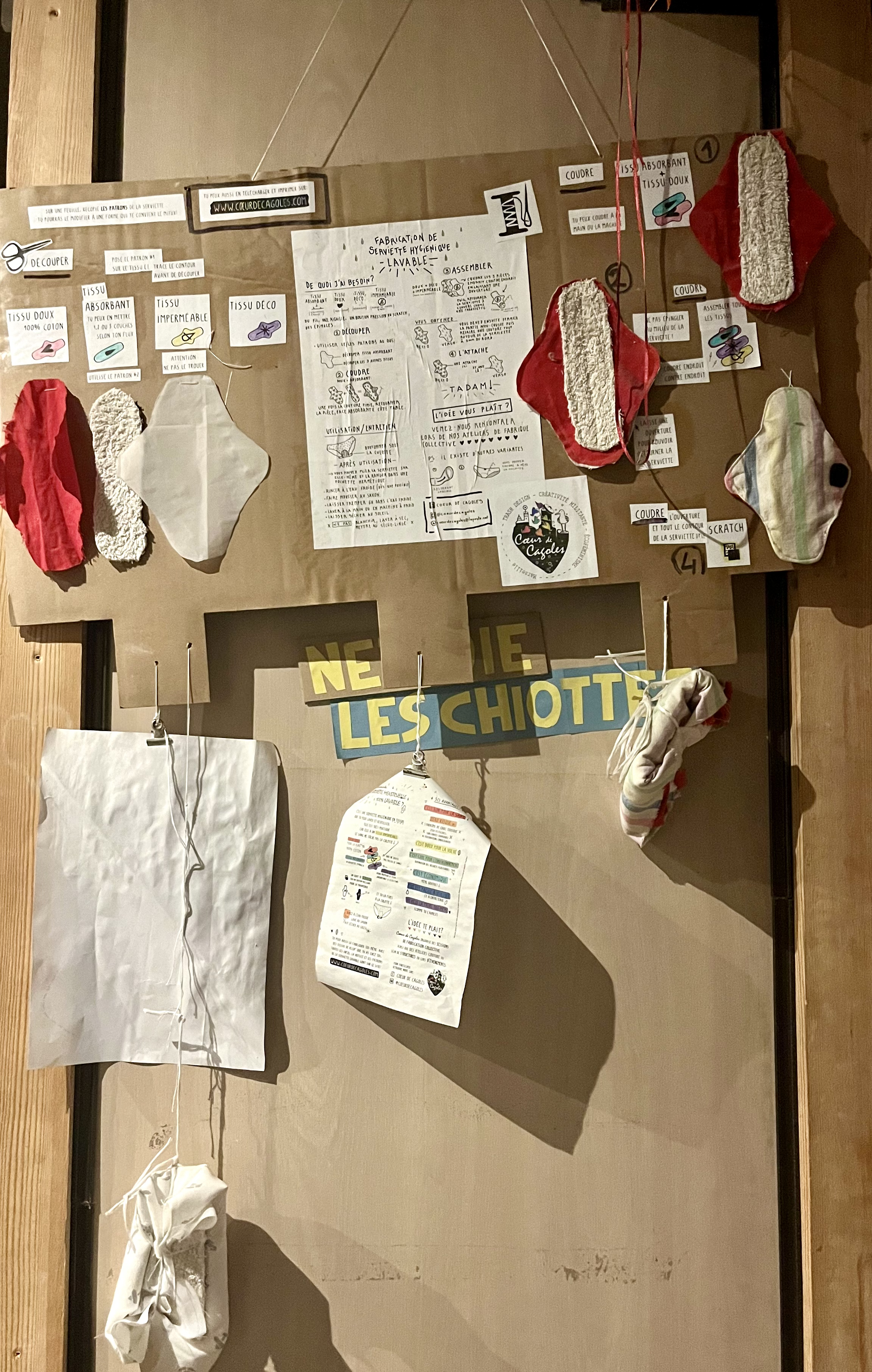
Along the walls, sanitary pads patterns are displayed on a large board. Photo: Clara Gazel
Règles Élémentaires, raise period poverty into a public health issue
Based in Marseille since 2023, Règles Élémentaires also fights against period poverty at different levels: distributing menstrual products, training and raising awareness on menstrual education, and advocacy. The goal is ‘to make it clear that this is a public health issue and not about everyone’s privacy,’ as recalled by Florence Lépine, head of the association in Provence-Alpes-Côte d'Azur.
Working with accommodation centres, student associations and Family planning, the association strengthens an already active network. Of the 130 organisations supported in the region, two-thirds are in Marseille. A figure that tells the extent of needs in a city marked by deep social inequalities. ‘Here, the needs are very, very frequent,’ notes Florence Lépine. ‘Many women are raising their children alone, often below the poverty line, and are therefore in a precarious situation and, in fact, in a situation of period poverty.’
In France, nearly four million women struggle to afford period products, according to the association. Behind this figure lies concrete realities, such as keeping a disposable pad longer than recommended, due to a lack of alternatives and information. ‘No one ever told me that you should keep a tampon in for a maximum of four hours,’ stresses Florence Lépine. She also points out the health risks of using toilet paper, sand or newspaper as substitutes, which can lead to ‘a risk of infection that can go up to septicaemia and death’.
To break this vicious circle, Règles Élémentaires runs awareness workshops for 8-25 year olds and trains health and social care professionals. The goal: to deconstruct stereotypes that convey false information with real health consequences.
‘We put out fires where we can’
At the same time, the association lobbies public authorities. The collaborative application Regla geolocates places that distribute menstrual products. ‘The idea is to encourage municipalities to act by pointing out those that do nothing.’ Yet political action remains slow. On March 6, 2023, Prime Minister Élisabeth Borne announced that reusable pads would be free for those under 26. Two years later, no implementing decree. ‘Many organizations think that the measure is already applied while we are still waiting’, regrets Florence Lépine.
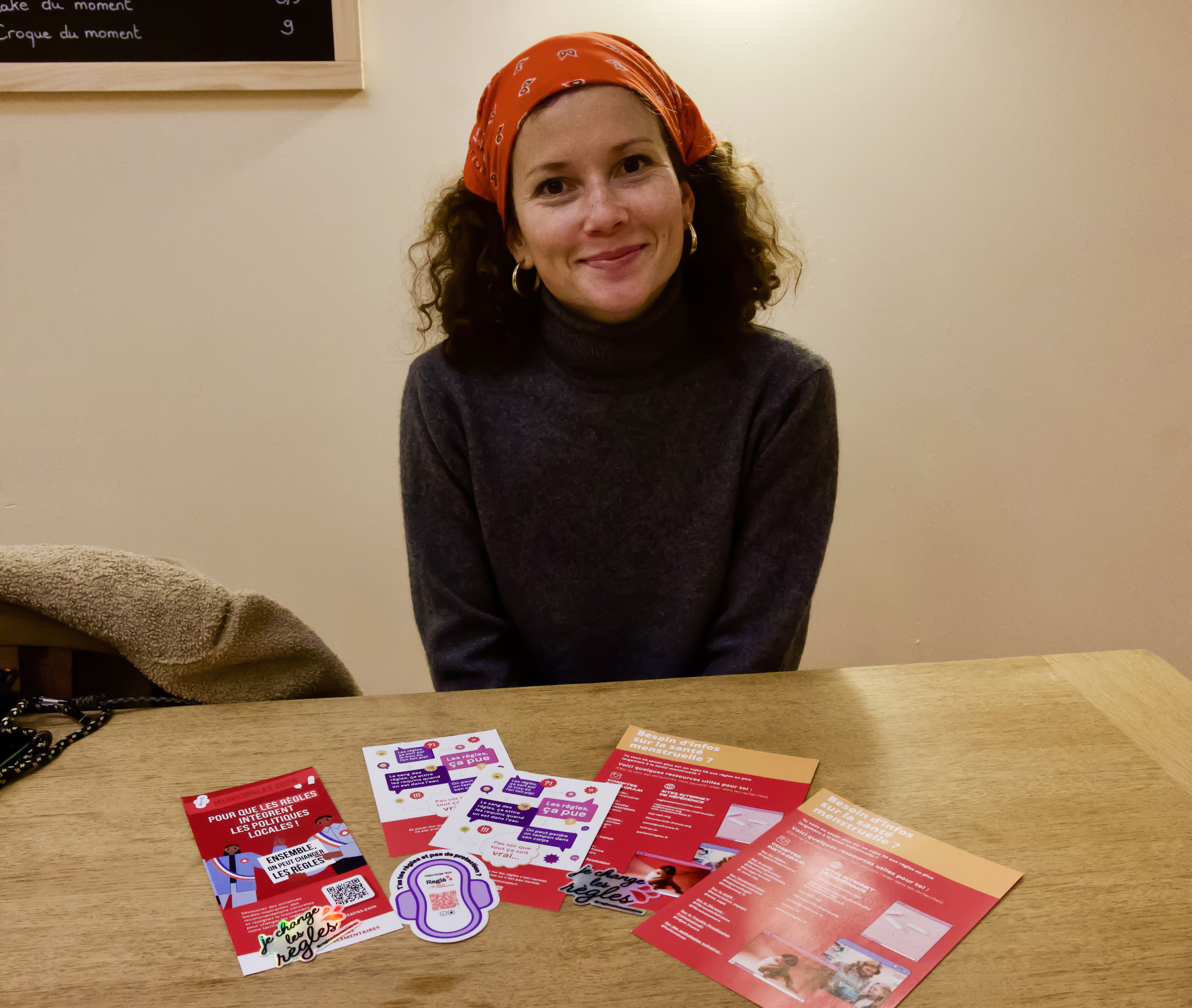
The Règles Elementaires’goal is ‘to make it clear that this is a public health issue’ as recalled by Florence Lépine, head of the association in Provence-Alpes-Côte d’Azur. Photo : Clara Gazel
Faced with this void, associations are trying to fill in the gap. ‘We put out fires where we can,’ she says, while warning: ‘We cannot rely solely on ourselves.’ Requests come in daily, donations are uncertain and period poverty is not receding.
Anouck Carlier & Clara Gazel


